What Is a Truck Unloading Conveyor and Why It Matters
A truck unloading conveyor is a mobile or fixed conveyor solution designed to move parcels, cartons, sacks, totes, and bulkier items from trailers to the first touchpoint in your facility with minimal manual handling. By bridging the gap between the dock and internal flow, it standardizes the pace of unloading, shortens dwell time, and creates a predictable inbound rhythm for downstream processes like sortation, putaway, and cross-docking. In fast-moving sectors such as express delivery, e-commerce fulfillment, and cross-border logistics, shaving minutes off every trailer turn translates into significant gains in capacity and service reliability.
Traditional, labor-intensive unloading comes with hidden costs: fatigue, injuries, inconsistent takt times, and bottlenecks that ripple throughout the operation. A well-designed conveyor eliminates long carry distances, reduces bending and twisting, and ensures product remains oriented and evenly spaced. That ergonomics dividend is more than soft savings. Operations see fewer lost-time incidents, lower turnover, and more sustainable performance during peak seasons. In an era where talent is scarce and customer expectations are high, upgrading the dock is one of the fastest, least disruptive levers you can pull.
Modern solutions range from compact flexible conveyors to powered telescopic booms that extend deep into the trailer. The right choice depends on item mix, trailer types, door count, and staffing model. For facilities handling both parcels and heavier cartons, blended systems with powered belts for incline sections and gravity or powered rollers for accumulation can balance speed with control. Critically, the conveyor becomes a data-rich, safety-forward machine: variable speed drives, integrated sensors, and easy-to-reach E-stops make it safer and smarter than ad hoc manual flows.
When choosing a system, consider lifecycle ROI rather than sticker price alone. Energy-efficient drives, durable belts, and modular frames lower total cost of ownership. Proven OEMs in conveyor and automated logistics gear also bring commissioning support, operator training, and rapid parts availability—key assurances when you run 24/7. To explore proven configurations aligned with parcel, warehousing, and industrial requirements, see this truck unloading conveyor lineup for reference on capabilities and options.
Key Features, Configurations, and Technology Options
Telescopic belt conveyors are the flagship solution for high-volume docks. They feature extendable booms that reach into trailers, typically with two to four stages, and optional hydraulic lift to match floor-to-bed height changes. Belts provide gentle, controlled movement for cartons, polybags, and mixed parcels, while side guides and anti-slip surfaces keep loads centered. Traversing bases let one unit service multiple doors, a cost-effective approach when doors outnumber simultaneous unloads. For facilities dealing with changing trailer fleets or dock geometries, telescopics deliver exceptional versatility with minimal footprint.
Flexible conveyors—available in gravity skate-wheel or powered roller formats—shine when loads vary widely or when docks must reconfigure throughout the day. Gravity versions are economical, using pitch to move items; powered rollers maintain consistent flow regardless of load density. Pairing a short boom conveyor at the trailer face with a flexible line to feed downstream sorters creates a modular “plug-and-play” path that scales with seasonal volume. For heavier SKUs or industrial parts, robust roller centers, reinforced frames, and impact zones prevent jams and reduce wear.
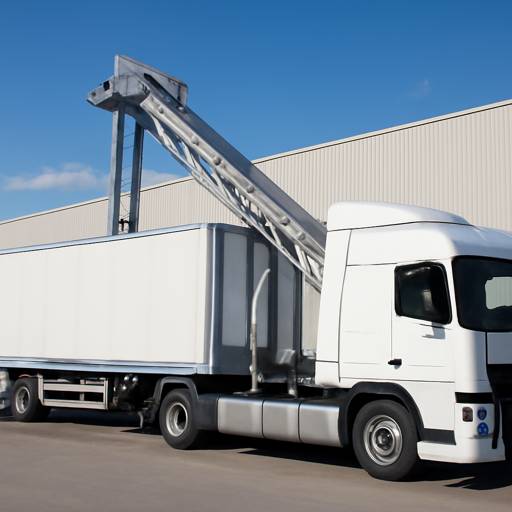
Controls and safety define the modern baseline. Variable frequency drives (VFDs) enable smooth starts and stops, reducing belt wear and product slippage. Photo-eye sensors regulate gaps and trigger alarms when blockages occur. Easily accessible E-stops, emergency pull-cords, audible/visual alerts, and guarded pinch points are non-negotiables in a busy dock. Lighting at the boom tip improves visibility inside trailers, while auto-retraction and soft-landing features protect both equipment and freight. For environments handling powders, textiles, or food-pack materials, antistatic belts and low-noise components further enhance safety and comfort.
Digital capabilities elevate performance. IoT-enabled condition monitoring tracks motor temperatures, belt tension, and cycle counts to schedule maintenance proactively, reducing unplanned downtime. Integrations with WMS or WES systems allow conveyors to ramp speeds in sync with receiving or sorting capacity, avoiding downstream congestion. Energy-saving modes idle sections when no product is detected, cutting power consumption over long shifts. In multi-lingual, multinational operations, intuitive HMIs and standardized diagnostic codes speed up training and troubleshooting—vital for regional hubs and cross-border gateways that run around the clock.
Deployment Scenarios, ROI, and Real-World Examples
In parcel hubs and express terminals, dock-to-sort speed dictates network health. A high-volume facility unloading 53-foot trailers might deploy telescopic belts across primary doors and use powered flexible conveyors to feed wave-based sorters. By halving manual carry distance and stabilizing rates to a consistent cartons-per-hour, one operation increased trailer turns by over 30% during peak, while reducing temporary labor by double digits. The consistent infeed also improved scanner read rates and minimized exceptions, raising on-time dispatch compliance without adding extra lines.
Cross-border e-commerce warehouses juggle diverse packaging, from padded mailers to heavy cartons. Here, hybrid layouts excel: a boom conveyor handles the immediate trailer interface; midstream, items transfer to a flexible powered roller line; then flow splits by weight or SKU family. With standardized induction height and ergonomic lift zones, teams can handle surges without compromising safety. In one export-import gateway, cycle times per trailer dropped from 42 to 27 minutes across mixed shipments, freeing doors for additional carriers and smoothing customs inspection queues downstream.
Manufacturing and industrial inbound present unique demands—bulk bags of resin, stacked components, or machine parts arriving in varied trailer types. Ruggedized conveyors with reinforced rollers, steel side-guards, and variable elevation make quick work of heavy or irregular items. Integrating scales, dimensioners, or vision systems at the infeed captures critical data immediately, enabling first-article checks and automated putaway decisions. Because inbound quality affects production uptime, the controlled pace and reduced handling damage from a truck unloading conveyor directly support lean, just-in-time objectives.
Calculating ROI follows a clear path: start with baseline unload time per trailer, labor hours per shift, injury costs, and dwell fees or detention charges. Model post-implementation with improved cartons-per-labor-hour, reduced overtime, and fewer incidents. Include lifecycle savings from energy-efficient drives and modular spares. Many teams see payback within 12–18 months, accelerated during peak trading periods. For a smooth rollout, audit dock geometry and trailer mix, choose belt or roller surfaces aligned to your items, specify safety accessories early, and train operators on both ergonomics and controls. Regional considerations—such as local power standards, service coverage, and spare-part logistics—ensure uptime in Asia-Pacific manufacturing belts, European cross-docks, and North American parcel hubs alike. With the right partner, you gain not just equipment but a repeatable unloading process that scales with your business growth.

Raised amid Rome’s architectural marvels, Gianni studied archaeology before moving to Cape Town as a surf instructor. His articles bounce between ancient urban planning, indie film score analysis, and remote-work productivity hacks. Gianni sketches in sepia ink, speaks four Romance languages, and believes curiosity—like good espresso—should be served short and strong.