The piano offers a remarkable blend of predictability, creativity, and sensory variety that suits a wide range of neurodivergent learners. With its linear layout, clear pitch relationships, and immediate auditory feedback, the instrument makes pattern discovery feel both safe and exciting. Families seeking piano lessons for autistic child often report improved focus, self-regulation, and confidence when instruction honors communication differences, sensory needs, and the learner’s interests. By treating music-making as a collaborative, choice-filled process, the piano becomes more than a set of keys; it becomes a tool for expression, connection, and growth. Thoughtful pacing, visual supports, and relationship-centered teaching practices allow skills to build steadily, while improvisation and composition invite personal voice at every stage.
Why Piano Works: Structure, Pattern, and Sensory Regulation for Autistic Learners
The design of the piano is inherently friendly to pattern thinkers. Black-and-white key groupings create a stable visual map that supports flexible learning: a piece can be practiced with one hand at a time, in short motifs, or across predictable five-finger positions. This reliability helps reduce cognitive load, allowing attention to shift toward listening, timing, and touch. When considering piano lessons for autism, families and teachers can leverage these features to build routines that lower anxiety—consistent warm-ups, familiar chord progressions, and repeatable micro-goals. Over time, these patterns can scaffold more complex skills like two-handed coordination and independent finger control without sacrificing a sense of safety.
Sensory modulation is another advantage. The piano can be soft and sustaining or bright and percussive, inviting learners to choose their preferred sound world. For those who seek calm, simple pentatonic improvisations or slow arpeggios can reduce sensory intensity. For those who crave input, rhythmic ostinatos, low-bass patterns, and dynamic contrasts can satisfy that need constructively. Teachers can further tailor sessions by adjusting bench height for proprioceptive comfort, offering weighted or silicone finger caps for tactile feedback, and using noise-dampening pedal socks or keyboard covers to soften sound in echo-prone rooms.
Visual supports make abstract concepts tangible. Color-coding finger numbers or scale degrees, using large-stave notation, and placing removable stickers near target keys can minimize frustration. A visual schedule—even a simple three-card sequence like Warm-Up, Piece A, Free Play—maintains predictability and autonomy. For non-speaking students or those who use alternative communication, integrating AAC for choices (tempo, volume, piece order) ensures consent and clarity throughout the lesson. These strategies center the student’s agency, a cornerstone of effective piano teacher for autistic child practice.
Choice empowers progress. Letting the learner decide between two warm-ups or pick which hand plays the melody first supports engagement and reduces resistance. Integrated short breaks—a stretch, a favorite motif, or a sensory pause—help maintain regulated attention. When interest peaks around a particular theme (game music, trains, nature sounds), repertoire can be arranged to honor that passion. For families exploring piano lessons for autism, this strength-based, sensory-aware approach aligns music learning with well-being, creating conditions for authentic, sustainable growth.
Teaching Strategies That Respect Communication Differences
Effective instruction begins with listening—to movement, to body language, to the rhythms of breath and attention. Build rapport through short, predictable routines and clear, supportive cues. Instead of long verbal explanations, rely on modeling, echo-playing, and concise, positively framed prompts. Many learners thrive with “show-then-try” cycles and immediate, specific feedback such as “Great gentle thumb” or “Steady left-hand beat.” Gradual prompt fading preserves independence; shift from gesture to point to a quiet nod as skills consolidate, and document what supports work best for future consistency.
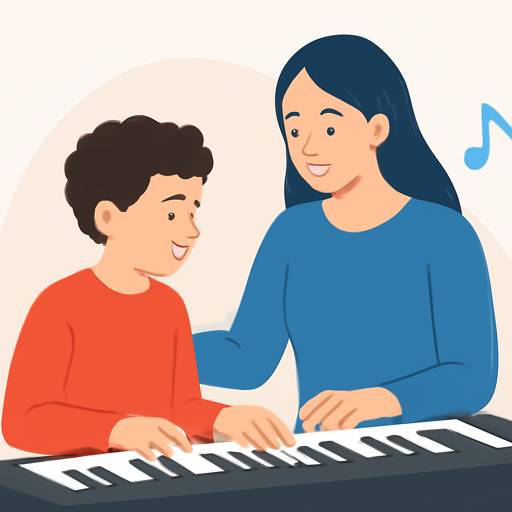
Flexible notation pathways unlock access. Some students read traditional staff notation immediately; others benefit from letter names, solfege, chord symbols, or simplified lead sheets while fluency develops. Pattern-based learning—broken chords, five-note scales, left-hand accompaniment templates—lets music sound complete with minimal visual load. For learners working on motor planning, hands-apart practice coupled with slow, steady pulse can prevent overwhelm. A metronome may be helpful for some and counterproductive for others; alternatives include steady teacher taps, a soft drum track, or visual metronomes that sync with attention rather than compete with it.
Respecting sensory and autonomy needs is vital. Stimming can be an essential self-regulation tool; make space for it without shaming or unnecessary interruption. If hand-over-hand guidance is considered, always seek explicit consent, offer an opt-out, and prefer less intrusive supports like modeling or shared hand mirroring. Provide choices about touch, volume, and pace. Short, frequent wins—playing the bass note of every measure first, or landing the final cadence confidently—build momentum. Align reinforcement with authentic musical satisfaction: record a favorite phrase, layer a simple left-hand drone under a new melody, or create a “sound postcard” to share with family.
Interests are the curriculum’s engine. A learner who loves stories might assign characters to motifs; one who enjoys numbers might track tempo changes or count patterns in measures. Caregivers can support practice by co-creating micro-goals (“Play the A section twice, then free play for two minutes”) and celebrating expressive choices, not just note accuracy. For those seeking a piano teacher for autistic child, look for someone who documents accommodations, collaborates with caregivers, and reframes progress around agency, regulation, and musical joy. This approach transforms piano lessons for autistic child into a personalized, dignifying journey rather than a race through a method book.
Case Studies and Real-World Examples: Progress Measured in Meaning
Every learning path is unique. Consider three snapshots that highlight how inclusive approaches turn small steps into significant musical and personal outcomes. An 8-year-old non-speaking student using AAC began with single-note improvisations on black keys while the teacher offered a gentle drone with the sustain pedal. Over weeks, the student chose “fast/slow” and “loud/soft” through AAC, shaping duets that felt shared and intentional. When anxiety spiked, the pair returned to a familiar three-note motif, then branched to a left-hand ostinato that the student could repeat independently. Mastery wasn’t measured by page numbers but by the student initiating musical choices and sustaining a relaxed posture for longer intervals.
In another case, a 12-year-old sensory-seeking learner struggled with fine motor isolation but loved rhythmic intensity. Lessons began with five minutes on a small pad for pulse and accents, then transitioned to piano where the left hand drove a two-note power pattern under a right-hand melody culled from a favorite game theme. Visual chord blocks on the score provided anchors without crowding the page. The student selected practice segments with a yes/no card, then recorded short videos to compare tone control week to week. Over a semester, stamina and tempo control improved, but the most meaningful shift was the student’s increased self-advocacy: requesting “softer lights,” “slower first,” and “again from line two” before the teacher prompted.
A 16-year-old who experienced performance anxiety preferred composition to recital. Together with the teacher, the student sketched a four-chord progression and explored voicings that felt comfortable under the hand. Using a phone recorder, ideas were layered section by section until a complete piece emerged. Sharing a studio “listening premiere” with the lights dimmed replaced the traditional recital with an environment that honored sensory needs. Metrics of success included steady breathing, consistent tempo over two minutes, and the student expressing pride in the finished track. These outcomes demonstrate how piano lessons for autism can center emotional safety while building sophisticated musical understanding.
Structure around events matters too. Recitals can be adapted with flexible seating, quiet zones, and optional performance formats: duets, pre-recorded videos, or small studio shares. For practice, a visual tracker that rewards process (“I played A-B-A once each”) rather than time alone emphasizes meaningful engagement. Remote lessons can thrive with clear camera angles on the keyboard and pre-sent visual supports; in-person sessions benefit from collaboration with occupational therapists to align bench setup and movement breaks. Across scenarios, the most reliable indicators of progress are engagement, self-advocacy, and musical agency—the heart of what a responsive piano teacher for autism seeks to nurture.

Raised amid Rome’s architectural marvels, Gianni studied archaeology before moving to Cape Town as a surf instructor. His articles bounce between ancient urban planning, indie film score analysis, and remote-work productivity hacks. Gianni sketches in sepia ink, speaks four Romance languages, and believes curiosity—like good espresso—should be served short and strong.